Tuesday, January 26, 2010

Five Films That I Should Have Seen Years Ago

A few weekends ago I was rather ill, so while lying in bed I took the opportunity to watch some truly nasty little films about horrible things happening to people, including several that, as a film nerd, I should have seen years ago. I've been thinking about that special list of films, the "shame films", which cause my peers to recoil in horror at learning that I've never seen them; they're modern masterpieces, but I've never gotten around to them. My pride prevents me from listing examples that are still unseen, but the film that kick-started this train of thought was Darren Aronofsky's Requiem for a Dream.
Yes, I admit it, I'd never seen Requiem for a Dream before. And, frankly, I'm actually happy I waited this long, because now I have the right mental tools that enable me to appreciate it, despite the fact that it rattled me so greatly. So here's my list now, reflecting on all this. The films I watched over that weekend will be indicated with a *.

Five Films That I Should Have Seen Years Ago, but Am Grateful I Waited To See.

1. Requiem for a Dream* (2000), Darren Aronofsky

I remember seeing a trailer for this while watching television in my cousin's house in Montreal one summer, and even the trailer unsettled me in a very private way. I knew it was something I'd need to wait to see, because I knew it'd be disturbing, and my god, is it disturbing. Requiem is brilliant--though everyone probably knows that--featuring absolutely outstanding camera work, editing that will make you wonder if you're really as sober as you think you are, and a third act that never, ever lets up, carrying the characters to places that are too dark to stomach. It's a relentless, difficult film to watch, and if I'd seen it earlier, I'd never be able to step outside the horror I felt at the end and be grateful for Aronofsky's ability to provoke that kind of emotion. He has my respect, but it'll be a while before I see this one again. Like House of Leaves, Requiem for a Dream has a spot in my top films, but I need recovery time before a second viewing, if I'm ever that brave again.

2. American Psycho (2000), Mary Harron

This is probably one of Christian Bale's best performances, and I was a Newsies fangirl who wanted to see him as much as possible, but this one would have utterly horrified my more girlish sensibilities when I was younger. It's gory, it's got a lot of freaky sex stuff (especially for junior high, where I was when the film came out), and it's also relentless, in its own way. With both my psychological background and the habituation to film violence (something that only happened a few years ago) that I have now, I can appreciate the sick humor in the film as well as Bale's awesome descent into madness without thinking too much about that chainsaw thing.

3. Welcome to the Dollhouse * (1995), Todd Solondz
Also: Happiness* (1998)

Black comedies didn't truly become funny to me until I graduated high school and became the cynical bitch I am today. And Todd Solondz's idea of black comedy is probably some of the blackest ever conceived, utterly bleak and pessimistic and depraved, and sometimes not funny at all, but that nasty little part of you wants to laugh anyway. I'd heard about Welcome to the Dollhouse before, but not Happiness, Solondz' delightful 1998 romp about pedophilia and sexual depravity. Both have some pretty dark moments, though Dollhouse not so much, and I can appreciate them as strange, taboo-probing cinema, if not masterpieces. If I'm squicked by them now, several years ago I wouldn't have slept for days.

4. "Kids"* (1995), Larry Clark
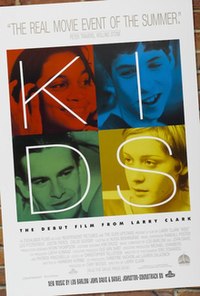
My goodness, 1995 was a depraved year, wasn't it? Seems that way. Kids, often known as the debut of actresses Chloe Sevigny and Rosario Dawson, is a day in the life of a couple of teenagers in New York, particularly 17-year-old Telly, self-professed "virgin surgeon" (in the very first scene we see him coercing a 12-year-old girl) and, unknown to him, HIV positive. The film was no picnic when it first came out, shocking audience members across America, but was probably the least horrifying film of the weekend for me, partially because I was such a sheltered kid that the last thing on my mind at age 15 was sex. Not easy, not pleasant, not necessarily a great film, but interesting.

5. "Jurassic Park" (1993), Steven Speilberg

Yeah, this one's pretty shameful to admit, too, but I would have been four years old when Jurassic Park first hit theatres, and I was a bona fide scaredy cat for most of my life, terrified by such things as the martians from Mars Attacks (*shudder*) or certain parts of Fantasia. Dinosaurs were fascinating--from an early age I wanted to be a paleontologist--but they were terrifying, too, and seeing this film at 18 still scared the shit out of me, though it was in that fun, breathless sort of way. As it stands, Jurassic Park proudly sits as one of my favourite popcorn movies; had I seen it as a child, I would have hated it.

There are more, but that's a good number, at five (ish), and I don't update this blog nearly as much as I should, so voila. I'm working on a massive essay on the director Tarsem Singh, so look for that someday. Until later!

Monday, January 11, 2010

5 Books I Can Never Put Down

First of all, I'm thrilled to say that my good friend Ze Doktar Von Hammerstein is helping me give my blog a bit of a shot of colour, so to speak, which I feel is needed, especially if I end up contributing to projects of his that are better left explained later. So look for pretty changes up soon!

That said, I'm currently reading Cormac McCarthy's "The Road", which I'm only really a quarter of the way into, but can barely put down; it's sad to say, but this is the first book in years that has sucked me in like this, and it's immensely enjoyable. I used to read a lot more, mostly before I discovered the internet, and I think it might be time to return to the habit of reading more and surfing less. My taste in books has always been a bit strange, and I am nothing if not prone to random lists, so here are the 5 Books I Can Never Put Down, in no particular order:

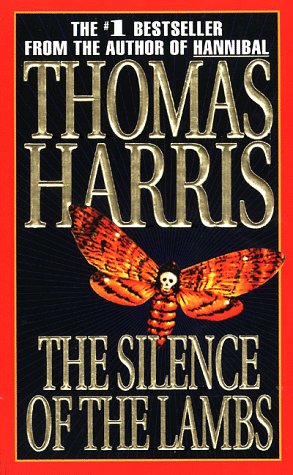
1. "The Silence of the Lambs", by Thomas Harris

Before Harris went certifiably nuts and destroyed the credibility of one of the greatest villainous characters ever committed to page (or screen) through two insipid, truly silly books, he committed one brilliant, beautiful novel to our bookshelves, and that is "The Silence of the Lambs". It's brilliantly written, utterly fascinating, and shockingly cold in tone--one of the many things that the film adaptation got right smack dab on the money was the tone of that world--and I've read it more times than I can count. Every time I pick it up I end up reading it all the way through, and each time there are new things I find to love about it. Hannibal Lecter is never as good anywhere else as he is right here, utterly hypnotic, and he'll worm his way into your inner monologue until you start to worry about nice Chiantis (well, Big Amarones, in the book) too.

2. "Fight Club", by Chuck Palahniuk

Oh, good old Chuck ruined a lot of regular, realistic fiction for me. Once you've read his immediate, almost-poetic prose for books on end, once you've witnessed soap made from mothers and the eating of live lobsters and all the other absolutely crazy shit he's written, it's nigh impossible to go back to any sort of "regular" novel, especially one in which people undergo subtle changes and make their lives better (like 90% of novels, it seems). The catalyst for ruining almost all other books for me forever was "Fight Club", not as great as the movie (for once!) but still pretty damn fucking fantastic. Say what you will about Chuck, he's certainly memorable, and he's never boring. Even when I'm not necessarily a fan of his choices (I found "Snuff" to be sadly rote and unoriginal), he's still good for a couple of moments of jaw-dropping WTF-ness, and while I love almost all his novels, "Fight Club" remains the best of his work, and my favourite.

3. "House of Leaves" by Mark Z. Danielewski

This one's an interesting entry for this list because, unlike the rest of the books, I've only read it once, and, despite my love for it, may never be able to read it again. There's a long story with "House of Leaves"; I bought it when I was in the ninth grade on a dare from my good friend Leah, who is forever doing more new and interesting stuff than I am at any given moment. I tried to read it, but I was about 14, and I got about 10 pages in to the long footnote manifesto written by the second or third narrator at this point about the stripper he's obsessed with who has a very intimate tattoo of a beloved Disney character, and I put it down. For about four years.
Fast forward to me working at my old summer camp in a boring office job, and I'd brought "House of Leaves" with me, intending to finally read it. And once I got through the first several chapters, I found that I suddenly couldn't stop reading it. Never has a book been more well-suited to grab you up and get you lost in it than the immensely subtle horror story of a house that is larger on the inside than it is on the outside, and, upon investigation, contains a labyrinth of possibly infinite size. But yet, it's about so much more than that, and so much less.
"House of Leaves" is by no means an easy read; there are about three (extremely unreliable) narrators, maybe more; there are pages upon pages of footnotes leading into footnotes, imitating the labyrinth itself; there are points when the text is backwards, upside-down, or blanked out completely; and there is the overarching story of the aforementioned stripper-obsessed Johnny, who is reading the same book you are and is starting to worry that the interior of his living room has a few more inches to it than it should. Reading this book was like being lost in a fog; I felt utterly wrung out by the time I reached the final pages, but I think all books should be that powerful, to dare to disturb and even repulse you. It's a rare thing for a book to gain a place in your favourites list but be too terrifying--in ways I can't really explain--to ever be read a second time, and I have immense respect for that.

4. "Perdido Street Station", by China Mieville

I rarely love science fiction and fantasy books, and find many of them overwritten, so this one has a permanent spot on my shelf precisely because it's so immediate in its weirdness that it sucks you right in out of sheer curiosity because you want to know what the fuck is up with the naked woman with a scarab for a head and that one guy who should have wings, but doesn't. And then you're a goner. The plot of "Perdido Street Station" is really almost impossible to describe, save that it contains mad scientists, steampunk flying machines, nightmare bats, the ethical dilemmas of interdimensional spiders, mutilated gangsters, a corrupt political system with an awesomely gruesome method for punishing lawbreakers, and a badger. All of it written by a guy who, to quote the literary source that alerted me to the book*, "uses the English language like Yo-Yo Ma uses the cello." High praise indeed, and deserving, too.

5. "A Tree Grows in Brooklyn", by Betty Smith

Yeah, so this one's fairly normal, I guess. I read it in the fifth grade at first, and 11 years later I still have the same copy, worn away and falling apart, loved to tatters. It's a fabulous novel, though not as immediate as the other entries on this list. It's the story of a young girl growing up poor in Brooklyn at the turn of the century, and the lack of any real plot is handsomely compensated by the excellent writing and clear detail at the little things that make Francie's life so real. It's a lot to get through, but once you do you'll have a friend for life, and can go back to all the countless little moments that are so easily imagined and so fully realized.


So there's my list. For added geeky pleasure, each of the covers for the books is the actual version that I own, because I'm just like that.


*that would be Uncle John's Bathroom Reader Plunges Into the Universe. Damn right I get my trivia from those things.

Tuesday, January 5, 2010

Classic Horror: CARNIVAL OF SOULS (1962)

All right, so I started out with the best of intentions, to watch these horror films in chronological order and review them, to reflect on how trends weave and change over time and how things vary over a span of a few decades of cinema. But my friend Dave came over and we ended up watching three entirely random films in the set, and knowing my tendency to procrastinate, I figured that I might as well get something out on the first film we watched, Herk Harvey's 1962 film Carnival of Souls. With school starting and my ability to do massive projects limited, I think reviewing these films in the order I see them will have to do until I get a little more used to blogging regularly--and this project is nothing if not a challenge to see if I can blog regularly. This may seem a little fragmented, but the goal here is to write something coherent and put it up. If I try to cover everything I will lose myself in the bowels of infinite draft hell.

So, Carnival of Souls. I knew the ending of this film before I even started it, due to a heavy amount of reading and a truly bizarre capacity to recall random trivia, but it's an interesting little film nonetheless. Filmed on a budget of less than $35,000 and released as a B-movie, Carnival of Souls has a plot that was fairly well-known, even for the time: a drag race ends tragically when one of the cars plunges off a bridge; the only survivor is Mary (Candace Hilligoss), a church organist who immediately moves to a new town to try to forge a new life. However, strange things begin to happen around Mary; there are times when nobody seems to be able to see or hear her, she has increasing difficulty relating to the people in her life, and she is haunted by a ghoulish man who seems somehow connected to the old abandoned pavilion just outside of town.

If you can't guess how the film ends, I won't spoil it for you; but while Carnival of Souls' plot has since become urban legend fodder, its execution contains some genuinely creepy moments and some really interesting subtext. The influence of one Alfred Hitchcock is immediately obvious; Hilligoss is a very Hitchcockian protagonist, a young woman with layers of sadness and secrets immersed in a world that has rejected her in such a fundamental manner as to actually turn against her. This is a film that came out a comfortable amount of years after both Vertigo and Psycho, both of which deal with women who do not quite fit into the world properly.
Mary would not be out of place seducing Jimmy Stewart, no, but her characterization is a great deal more pessimistic than Hitchcock might have made her. She is an embodiment of clinical depression in many ways: she has no libido, she goes through stages of being unable to communicate with anyone or anything, and she has no ability to enjoy that which she once (apparently) loved--this is a point of possible contention, for we are only ever told that Mary is a church organist after her accident, and thus it could be as unreal as the ghosts following her. The complete uncertainty of anything, even the things you thought you knew, is a frighteningly accurate portrayal of clinical depression, speaking as someone who has struggled down that road.

For a film shot in three weeks on a pretty small budget, the ghouls are pretty effective; the Man that haunts Mary (played by the director himself) has some pretty excellent jump-scare moments, even for jaded 21st-century viewers. Furthermore, the ghosts represent a discretely sexual, hedonistic presence. There is one scene where Mary, practicing the organ, begins to play a tune that is decidedly un-churchly in intent, making her very distinctly--if unwillingly--a seductress. As horrific ghouls and ghosts rise up from water to dance to her music, Mary's tune reaches a very distinct climax--a seduction by the things she is frightened of, but, in the end, cannot resist. It's a well-created scene, and the sexual component is not surprising in the least, for cinematic horror has almost always had a sexual component. Seduction is seduction, even if the seducers are horrific monstrosities; we are fascinated by what we cannot fathom or possess, and our emotions are so strongly connected to both sexuality and death that it is all too easy to mesh the two. Mary's story--from virginal church organist to semi-willing participant in her own destruction--is a morality tale about the dangers of straying from the beaten path as much as it is a meditation on depression, alienation, post-traumatic psychosis, and Death itself. There is something to be said for the ability to take a well-told tale and tell it in a memorable way, and Carnival of Souls fits that niche very comfortably.